Its fair to say we didnt have a normal winter, it was very mild. Fruit generally needs up to 1000 hours of cold temperatures (a broad statement but this very much depends on variety) to ensure the dormancy rest period to prepare for the coming busyness of the trees putting their energy into new growth and fruit. We got nowhere near that and I’m not fully convinced some of the trees went dormant at all. The other worrying thing, especially as an organic orchardist is that a long cold snap will kill bugs, diseases and fungal spores that threaten our trees and produce in various ways.

Although it was mild, it was wet and the orchard was very Boggy. However, the grass kept growing strongly but I couldnt do anything about it until the middle of March.
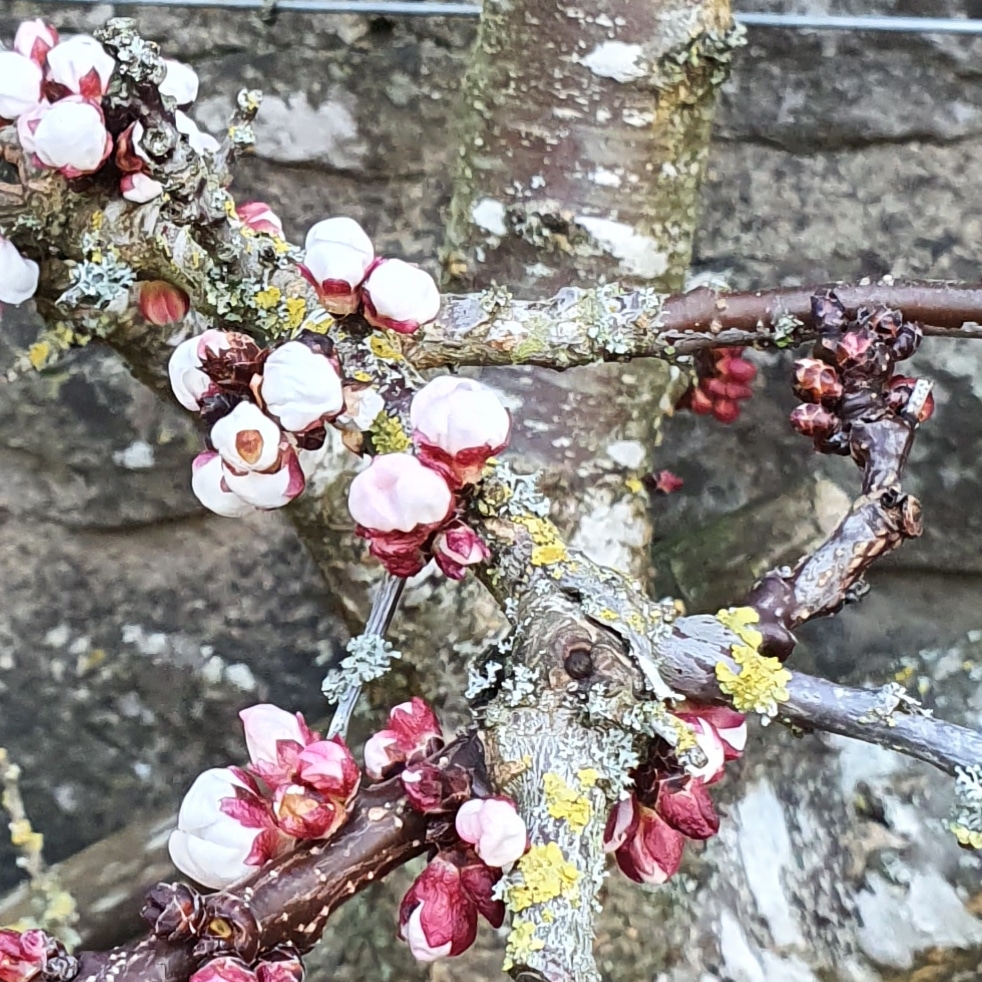
There was no pollinators at all when the Apricots went into blossom…this isn’t very unusual but 3 big storms threatened the delicate blooms. We got away with it unscathed. Some of our Apricots are on a south facing wall. I fleeced what i could and hoped for the best. I also hand pollinated the Apricots but I do this anyway.
We’ve ordered Chicken pellets, last year this worked very well in this orchard and the leaf quality was fantastic. I dont see any reason whay we should change that. We’ve also been mulching the Orchard with the compost from the ornamental garden. We have a big “Rocket” composting machine and in two weeks our prunings, leaves and woodchip turns into a useable compost.
I’ve also mapped out the gaps and varieties to fill for next year. We plan to put in a big order of various fruits and varieties in Autumn which is very exciting!!
Of course the pruning has been started and were halfway through. Theres lots of tyeing in to be done but I’ll leave that for a perfect spring day!!!

Pigeons!…we have so many. I’ve caught them eating the fattening buds on the Apricots. It’s not a problem I had on the farm so I’ll need to solve that for next year.
So, as always its been busy. I’ve also done lots of planning for the future…it’s what rainy days are for. These plans include organic pest control, encouraging beneficial insects etc, etc…
 The Grounded Orchardist
Leave a comment