So in light of the RSPB bird watch this weekend I thought I would chat about the pros and cons of birds in the orchard. Don’t worry, the pros out weigh the cons!
I have always been into nature, wildlife, the natural world and encyclopedias were my books of choice when I was young. I just filled my head with facts and figures about anything that was the natural world.

I know the Birdwatch is really about gardens but it got me thinking. What about all the birds in orchards that help the machine tick over behind the scenes. Doing a much better job than I can and they don’t even know it. We would be a lot worse off without them!
One big perk of my job is that I get to mingle with nature and birds are no exception. I have seen numerous flocks of birds birds resting on their migratory patterns, utilising the food that is within the orchard whilst on their journey and they seemed to come back each year. The great, green and lesser spotted Woodpeckers break up the quiet of an orchard in winter. Pheasants making me jump as I walk through the orchard and they noisily appear out of nowhere…all of a sudden! Robins hanging around following us from tree to tree. A friendly face in a lonely orchard. Pigeons acting like they own the place, Swifts and Swallows swooping around like a perfectly choreographed act, Blackbirds following the tractor after mowing and pulverising, Wrens darting in and out of wind breaks, Blue tits happily milling about, Buzzards and Red Kites fending off others and surveying their land, Sparrowhawks swooping low and looking like they’re having the time of their lives and many that I just don’t know what they are. The racket the new parents make as I approach a nest without realising…they can get quite upset! Then there’s the falconers who exercise their birds above the trees with the added bonus for us of pest control. In fact it’s always been a time of awe and wonder, theres a lot going on in the seemingly quiet, still orchard and thats just the birds.

Pros of birds in the orchard
- They keep Aphids, Caterpillars and other pests under control.
- They eat fallers which also helps them rot down quicker.
- They are able to control Aphids and other pests overwintering and hiding in windbreaks and hedgerows.
- Their vacated nests are a home for insects in the depths of winter which creates food for other birds…an accidental habitat and I keep the nests for this purpose.
- Mulching under the trees creates a lot of living movement under the soil as nature does her thing and ground foraging birds are easily able to dig here even when frosty.
- Some birds use Lichen to build their nests.
Cons of birds in the orchard
- Pigeons eating fattening Apricot and Peach fruit buds.
- Birds wiping out your Cherries in one evening as soon as they’ve slightly ripened.
- Birds feasting on 1st class apples.
- Birds eating beneficial insects and mammals. This is a balance though, if you don’t have predators, then you don’t have prey. We need both and do not want a sterile orchard environment.

Again, it’s all about balance. We know birds will eat all our cherries but we also know if we net them we will get a crop! (Make sure no birds get stuck in the netting!)
We know, because I’ve watched them that pigeons will eat fattening fruit buds and in their quest snap branches with their weight on them. However, they also eat weed seeds and are much happier feeding on the ground so again. We net the trees to stop them from eating the fruit buds.
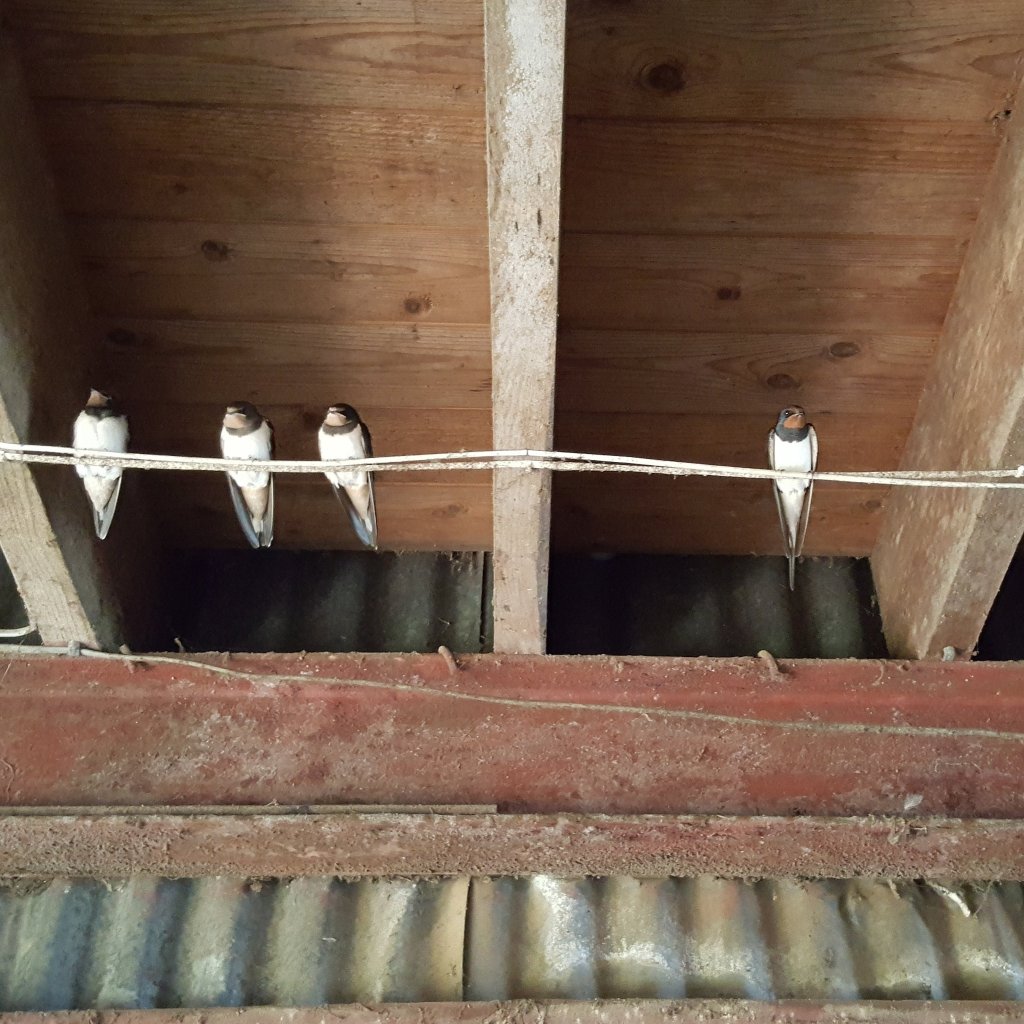
Swifts and Swallows eat whilst flying. They prefer flying insects and spiders that are in the air. Swifts are usually higher than Swallows who like to fly low. This means that both are getting different prey and highlights the importance of diversity within the orchard.
Pheasants eat lots of insects in summer and lots of weed seeds in Winter. It certainly doesn’t stop there as they seem to eat anything but as mostly ground feeders they’re very important to the orchard.
Buzzards hunt rabbits, hares, small mammals, worms, beetles, birds, amphibians. Very useful for the the never-ending rabbit population which can girdle a tree in minutes.
Red Kites are scavengers. They’ll tidy up carcasses, road kill, worms, beetles, small mammals and other dead animals.
Again….its a balance! I could go on, but I won’t. Click the link for more info on the RSPB Birdwatch 2023 https://www.rspb.org.uk/get-involved/activities/birdwatch/
 The Grounded Orchardist
Leave a comment