How to prevent a late spring frost from damaging your fruit blossom
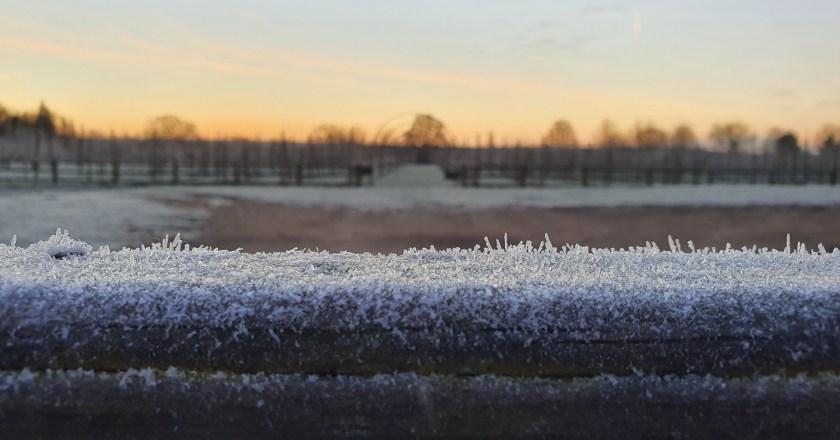
So, the weather has definitely turned. We are without doubt over the worst of the winter weather and we are now in spring! You get your cold days however, you also get those sunny hotspots where you feel like you are recharging. These sunny hotspots also dry you out from the spring rains.
You can easily get led into a false sense of security. It is too early to think we are over the last of the frosts…we might be…or, we might not! So as always we are constantly looking at the weather, watching it change its mind every hour by which time you have figured it out yourself. Then you notice there is a frost due….”Nahhh, the suns out and we’re in double figures” you think, and there lies the problem. A clear sky, wind is in the right direction… there could be a sneaky frost. So below we have a few methods that growers use to counteract Jack Frost attacking our delicate blossoms.
Fleece
You may chose to fleece your trees, a double-folded sheet works as well if there isn’t much to cover. You only need to cover the open flowers, as its the reproductive parts the get frosted. If you have a lot of trees or vines this is not possible without a structure.
Frost fans
Frost fans take warmer air from above and blow this into the orchard they also have the benefit of blowing the frost elsewhere. This is a method used a lot in the UK.
Crop candles
You may choose to use crop candles. They can burn for up to 14 hours and keep the temperature just above freezing. These work very well but you need to spend the time laying them out and lighting each one. A laborious task if you have acres of orchard or vineyard but worth it to save the crop or if you only have a few trees in your garden.
Frost protection cables
Simply a heated cable situated along the tree row that keeps the air temp above freezing.
Irrigation for frost protection
This usually involves a sprinkler system covering the crops with water. This freezes around the blossom and creates an icy barrier which stops the frost freezing the flowers. This works very well. I was reading about a Blueberry farm in Scotland which uses this method of frost control. Many orchards in Kent also use this method. It looks incredible but expensive to run I would think.
Or…the risk it and do nothing method
Perhaps you have assessed your fruit bud and decided its worth the risk. There are only a few flowers open. Most are safely tucked up still. Its worth the risk, I did that with some Apricot blossom a couple of weeks ago.
The cut the grass/understory method
Some people whether an orchard or garden scenario would cut the grass on that fine spring day where frost is possible. You could do this just around the tree if you wanted too. Long grass is cool but the soil is often quite warm. Cutting the grass allows some of this warmth from the soil to radiate up into the tree canopy. The developing blossom and leaves then lock this warmth into the tree. Remember 1 degree could make all the difference.
Grow on a south facing wall
If you are in the planning phase of where you could put your trees and are lucky enough to have a south facing wall. You could put your fruit trees here. The heat from the wall heating up in the day locks onto that temperature and then radiates that heat through the evening back into your tree.(reflected heat load)
How to tell if your fruit blossom is damaged by frost
If after a frost you want to check to see if your blossom survived. Take off a flower. Break the blossom open to reveal the reproductive parts. If the ovule is black instead of green or yellow then the blossom hasn’t survived and you will get no fruit that year. Check a few to get a vague average. Don’t get bogged down if lots are black. Let the trees do their thing and hopefully you will be surprised!
 The Grounded Orchardist
Leave a comment