Here is a list of orchard jobs that can be undertaken in Spring
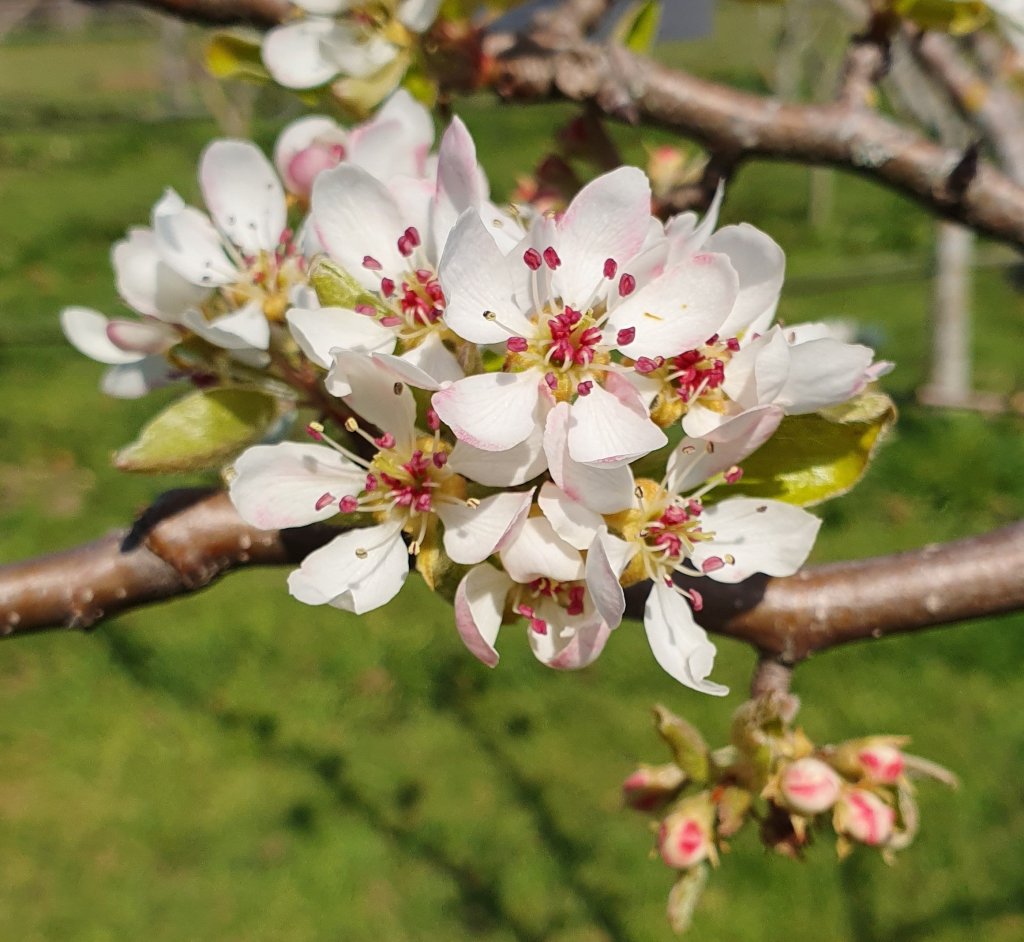
Spring offers better weather and the excitement of a new season. I say better weather but the chances of you getting wet in the spring rains is high. I often find spring quite difficult in terms of weather. You seem to get all seasons in one day and I end up trying to work with my back to the weather if possible! The chance of frost is a lot less but keep an eye out, you can still get hit by a late frost. As I write I am wondering if the Pear and Cherry blossom was affected by last nights cold snap. Be ready to protect your blossoms. On a warm day the pollinators will be waking up and getting out and about but if its windy and wet…you wont see them, they’ll be safely tucked up at home. This is a list of spring jobs in the orchard or for your fruit trees at home.
Tieing in trees
Due to the lack of leaves on the tree and your winter pruning is probably almost over, now is a good time to tie your trees in. Regardless of if your trees are tied to stakes/poles, wire or trellis. This gives stability to the tree by preventing wind rock and helps it get stronger. You can also guide your tree to grow where you want it too for aesthetics or for the good of the tree i.e. creating gaps for air movement. It also has the bonus of stopping pigeons sitting on your newly established centre leaders and snapping them!
Cut back any suckers missed in winter
You’re bound to have missed some or they may have regrown. Its a good idea to check again whether you have one tree or a whole orchard. You have the benefit of no leaves yet so you can easily see through the tree and can easily manoeuvre around it. Cut any you find down to the ground…or attempt to grow it on, if you manage to get any with roots attached. See previous post!
Finish winter pruning
If you have a large orchard you may not have finished winter pruning yet. Or maybe you haven’t found time to start.
Spring pruning stone fruit
Stone fruit such as plums, apricots, cherries can all be pruned now. Choose a day where there’s no rain forecast for the next few days to hopefully stop the spread of silver leaf disease and bacterial canker.
Grafting
Keep grafting your scions to your rootstocks, we’re a little bit late now but as always, there’s no harm in trying!
Fleecing
Its easy to believe we’re past the frosts…don’t get too relaxed. Be prepared for a late frost to protect your open blossoms. Last year our pears were hit with a late frost and we lost half the crop! See my previous post for some ideas on how you can prevent this.
Flower thinning
I prefer to wait until the “june drop” and thin out fruitlets but you can thin out blossom now if you would prefer. You may also decide to take off all blossoms if the trees are newly planted. This is usually done for the first two years for a 2 year old maiden tree. This means you will get no fruit but this is a worthy investment so the vigour goes back into making a strong, healthy tree with a good root system for the future.
Pollinator enticing
Plan how to entice in more pollinators. Wildflower strips containing a mixture of flowers or flowers that are open are perfect for orchards. Or carefully chosen ornamentals.
Hand pollinating
I hand pollinate Apricots and Peaches every year. I use a soft brush and take the pollen from one flower and take it to another. You need a dry, warm day and repeating this over several days is key. The pollen isn’t very sticky on Apricots and Peaches which is why the dry day is key.
Feeding fruit trees
You can ground feed trees in a few weeks time. I put down chicken manure pellets. Its a good start for the tree and it lasts the tree a long time. A small amount of bio char, volcanic rock dust and mycorrhizal fungi is also very good for soil health.
Make and plan habitats
Think about how you want to keep your pollinators and beneficial insects in your orchard or tree. Help them make a home so they can stay. Work out what naturally is in your area (Even in the UK this changes considerably) and work out what they like, need, how low or high do they fly?
 The Grounded Orchardist
Leave a comment