A few tips on working out when to feed your fruit trees. The trees tell you and you are able to use this information to have more sustainable fruit trees or orchard set up.

It’s a proven theory that healthy fruit trees (or any plant) have a resistance to attack from pests and diseases far greater than an unhealthy tree. As well as being better for you and your tree this means you can be more sustainable by not over feeding your tree which can cause allsorts of problems…even death to your tree. You also don’t use more of something than you need, this keeps down fuel costs and adds less strain to supply and demand which extends to world issues.
Last weeks fruit tree fertilising story
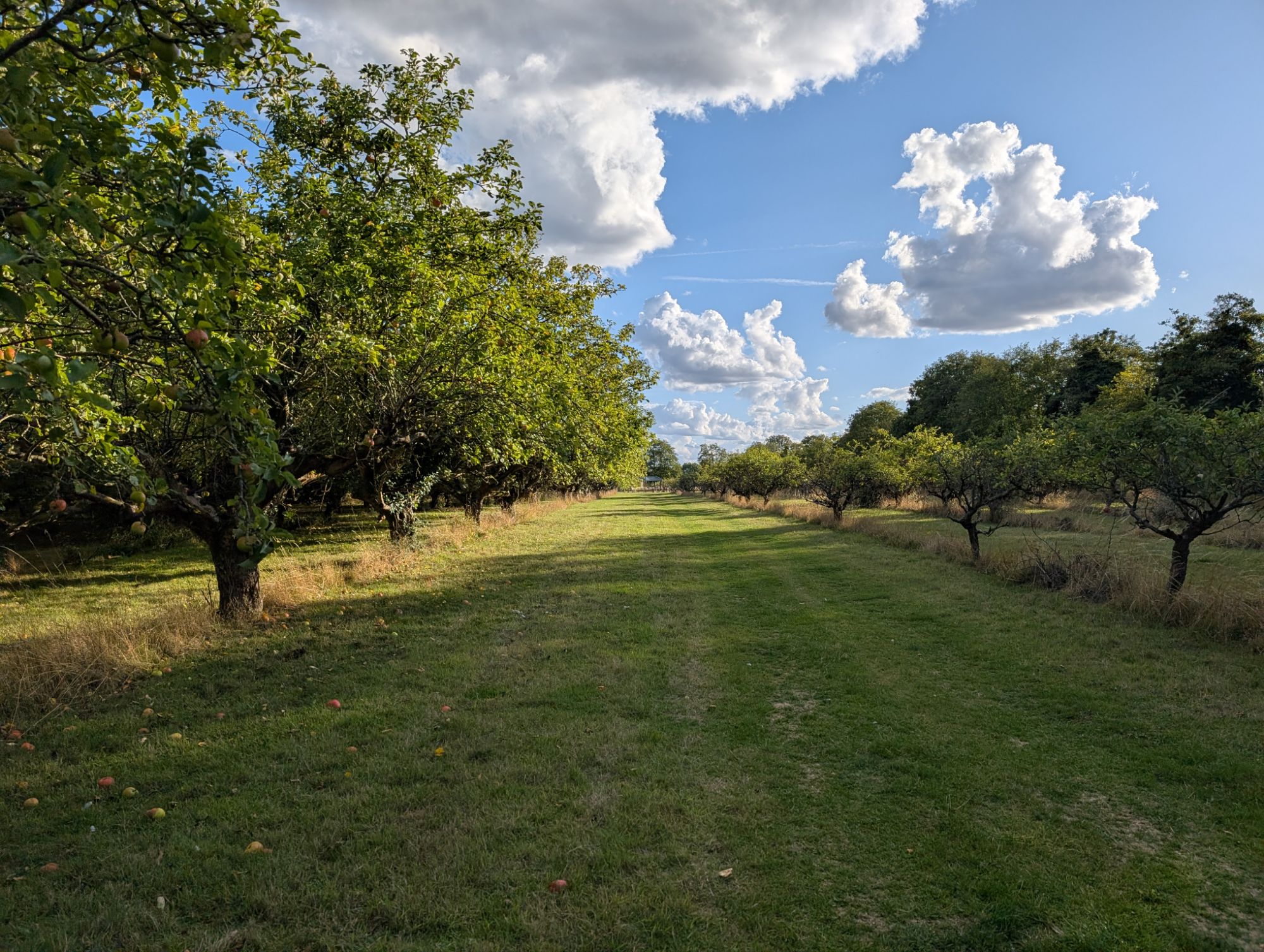
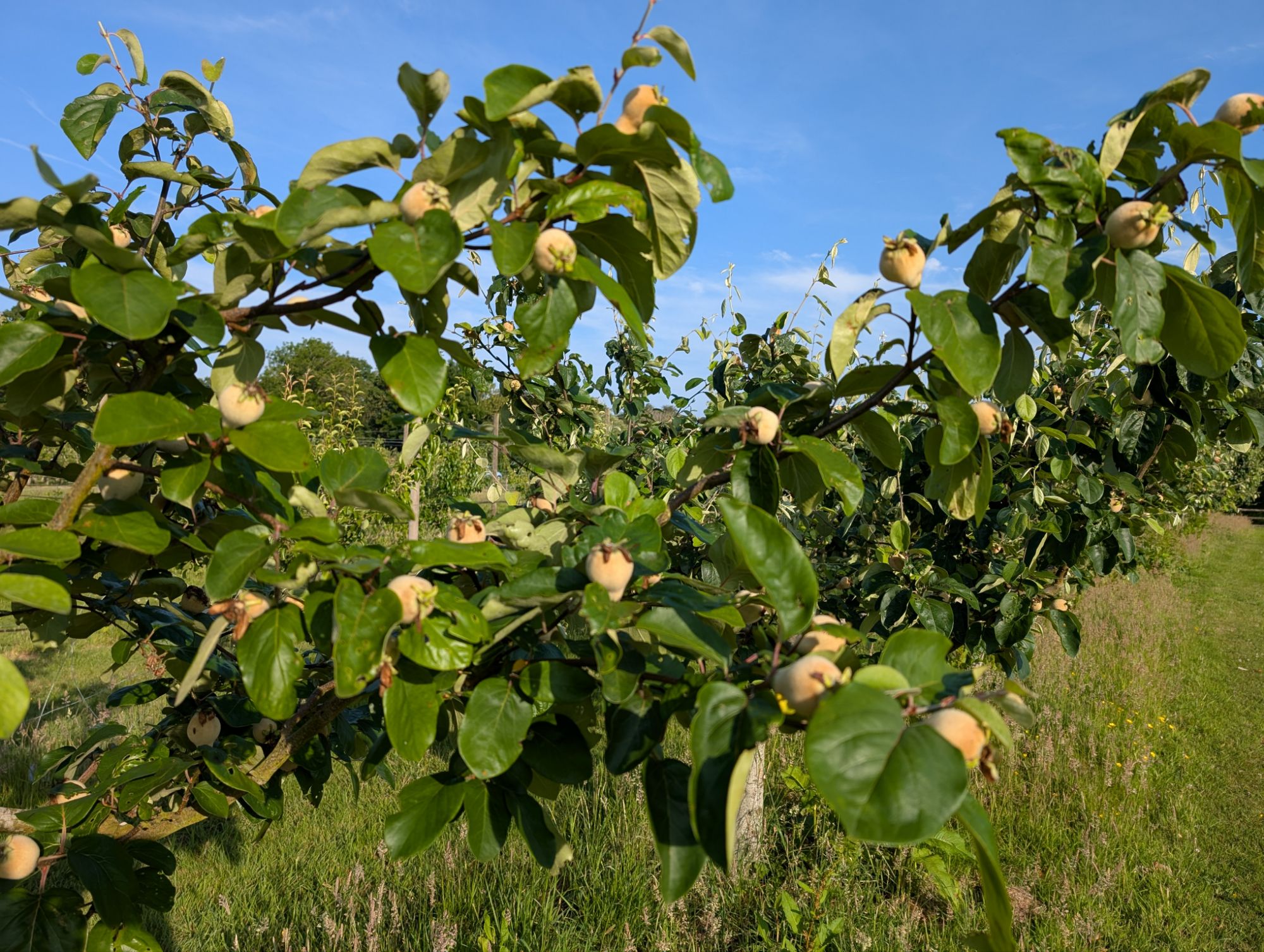
A Cropwalk through the orchard meant I did indeed need to feed our fruit trees. Now I have made a start on some. The Quince for instance were showing signs of needing nitrogen. Leaves were yellowing/washed out, growth was beginning to slow and the trees were suffering with aphid damage. So I fed the Quince, Medlars, Apricots and crab apples last week. I deliberately left the apples and pears until the last minute. A bit of an experiment to see if leaving it until it was really needed would help later in the season. Also, weather conditions just were not right. I needed a full dry day with rain forecast after. I also had lots of mowing to get done on a dry day.
The other reason I wanted to wait was I wanted to be able to take as many aphids out of the orchard as possible. They are going to love that fresh new growth I’m about to create with the feed. So the day before “feeding day” I took out any aphids I could find by hand, also caterpillars and Powdery mildew while I was there and disposed of them.
Now yesterday was the day. All the mowing was completed in the week and the visible pests I could find were out. It had rained alot the day before so the ground was wet. This would start breaking down the chicken manure pellets. The day was dry, lovely even and there was rain forcast in the next couple of days. So I seized the day as it were. It wasn’t in the plan but you do need to swap jobs around to be most efficient.
Reading your trees
My next experiment for this year was to really read the trees. This is a bit of an ordeal with this many trees but I should have a much happier orchard. For instance, we have 153 different varieties of apples. All require slightly different requirements, most will cope with a blanket treatment. However, apple varieties such as Bramleys seedling, Egremont Russet and Annie Elizabeth suffer from bitter pit. This mean I need to adjust the nitrogen levels….or add calcium. So now the orchard has had it first dose of npk I will closely monitor the trees. Ensuring that I spot treat those that need it but at the beginning stage of them asking for it. I don’t want to trees to suffer.
My tips for feeding fruit trees
- Do not over feed, stick to the recommended dosage of your chosen feed to avoid other deficiencies or even death of your trees.
- If possible use the weather to your advantage. If rain is not forecast than consider watering in your fertiliser to get it to leach into the soil quicker.
- Read your trees try and only give them what they need
Check out the tips below and do a bit of research as some of these symptoms on leaves can be indicative of something else.
- Yellowing or washed out leaves, stunted growth, poor fruit set and small fruit often indicates nitrogen deficiency
- Brown/purple leaf margins turning to brown crispy edges could be Potassium deficiency
- Reddening of apple leaves could indicate Phosphorus deficiency
- Brown leaf margins/edges alongside Bitter pit in susceptible varieties could be Potash deficiency
- Pale, fuzzy, thick new growth could indicate Iron deficiency
- Bitter pit showing in fruit, Brown blotches on peach leaves, turning to black in the middle before they drop could be Calcium deficiency
- Cracked fruits on apricot, Deformed, stunted growth on apples may be Boron deficiency
- Purple tint to the leaves with dead patches between the leaf veins possibly Magnesium deficiency



Leave a Reply