Being that today is King Charles III and Queen Camilla’s coronation, it seems fitting to talk about the time I was lucky enough to visit his orchard at Highgrove. I have long been an admirer of his forward thinking in terms of the environment and food growing initiatives. He has been way ahead of others for a very long time.
I was feeling a little baffled when I started this job. How do I marry up the guest experience, with a working orchard, whilst using organic principles but it also needs to be a formal space. It seemed a little daunting. I was trying to think of different orchards I could visit but I needed them to be as part of a formal garden. Of course Highgrove have been organic for a very long time and I was very fortunate to get an Orchard/garden tour with their Head gardener, Brian Corr and Head veg gardener at the time, Daniel Fisk. I wasn’t quite sure what to expect but they made me feel at ease very quickly.
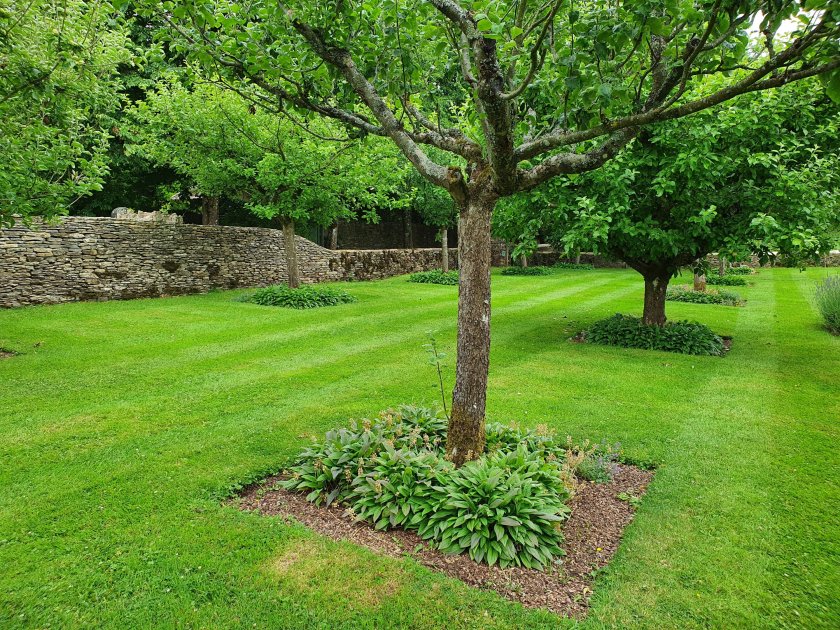
Highgroves orchards
As expected his orchard was very interesting. The then Prince Charles has a very formal small orchard, surrounded by striped grass and square beds for each tree. Each tree is underplanted with Catmint, bulbs and various other things. They tried Lavender but the apple trees shaded the Lavender too much so they swapped to Catmint. This small formal orchard is in the guests, public area of the Highgrove estate.
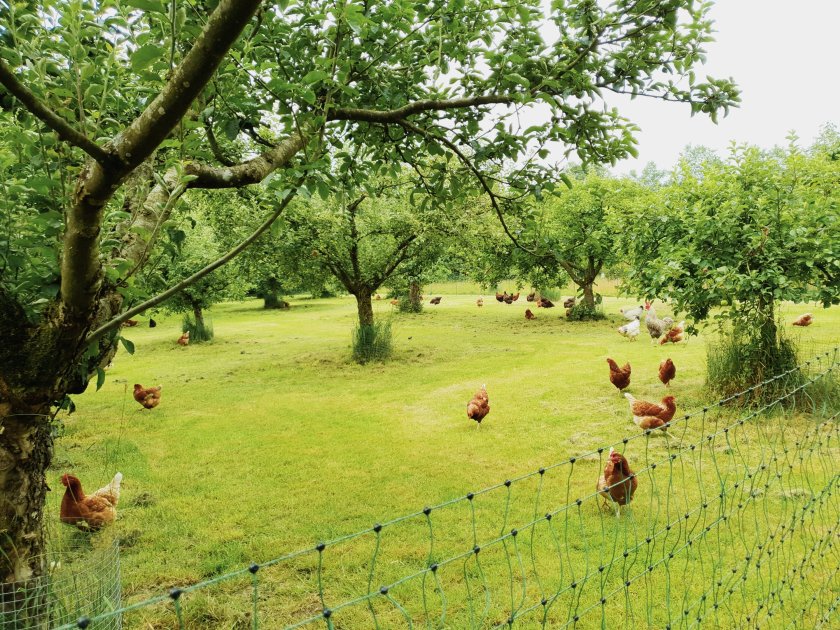
There are orchards in an area behind the scenes where visitors do not go. These have free range chickens roaming under the trees. The chickens are rotated every two months as they do ravage the grass. The chickens don’t mow the grass as such but stunt it and of course the manure they leave behind is great for the soil and trees.
Mistletoe
One thing I was very excited about was that they have successfully grown mistletoe on one of their pear trees and the tree shows no sign of nutrient depletion or stress. I had never seen this in real life before. I intend to do this at Le Manoir. We currently buy in Mistletoe, how wonderful if we could grow it ourselves.
Initiatives and working with nature
Much like ourselves at Le Manoir they are constantly experimenting and trialling new products to be more sustainable. They had trialled a coir matting with biodegradable plastic backing, covered with woodchip. They placed this at the base of their fruit trees as a mulch. This needs replacing every 18 months.
As this orchard is behind the scenes in terms of the public and very much part of his home they are able to leave nettles to grow at the edges in a bid to increase biodiversity. The grass here is also mown when the grass gets to mid shin height.
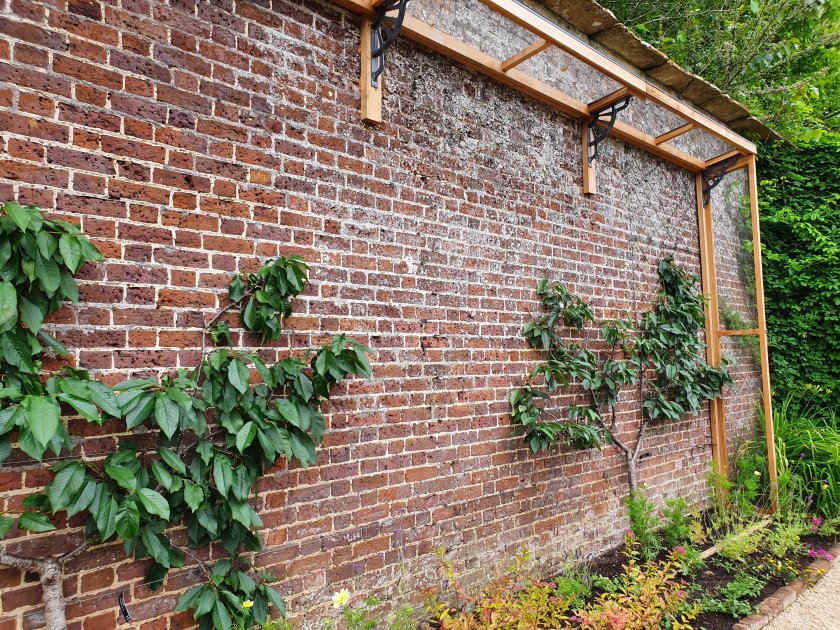
The walled kitchen garden was just incredible. They have lots of established fruit trees here growing within the veg beds. There are lots of trained fruit growing very well on the walls, mostly fan trained. Apples cherries, plums, pears, redcurrants, grapes and quince.
The borders in front of the walls also has berries and currants. Wild Strawberries and Violas are grown underneath many of the apple trees. There is also a big apple arch tunnel going straight through the centre of the veg garden. The trees are espaliered with possibly ten tiers, very close together to create the tunnel. These trees are underplanted with Hellebores and Rosa rugosa on the outside of the tunnel. The Rosa rugosa is cut back to knee height and not grown to flower. King Charles likes the smell of the foliage and says it smells like apples. They mulch with well rotted manure. This is of course all certified organic.
They do not spray anything on their fruit trees and rely on pheromone traps and wasp traps. They try to work with nature as much as is possible, doing enough to stop an infestation but letting beneficials do the rest. An approach we are trialling at Le Manoir. When I visited they were looking into making their own compost teas with relevant foliage from their own estate.
The produce grown is primarily used whilst the King and Queen are in residence, working with the King and chefs. There are also tea rooms on the estate and the Highgrove shop in Tetbury, which is the next town where produce is also used.
There are huge meadows which are traditionally scythed, The royal bees are situated at the edge of the meadows.
The apples that are not eaten are sent off to be juiced for their apple juice and their cider is made from Queen Camilla’s orchards on her estate.
I found the Highgrove to be very welcoming, it was obviously very special but also very much someone’s home. I still very much admire his ethics in sustainability, ecological issues and food growing/regenerative farming ethos. It was evident everywhere I went.
I visited before he became King and in preparation, Highgrove was in the process of renovating one of the buildings on the estate. This was to showcase traditional and heritage crafts with the intention to stop these crafts from dieing out. This is now open and runs workshops. The link to this is below.
https://www.highgrovegardens.com/pages/highgrove-traditional-crafts-courses-workshops
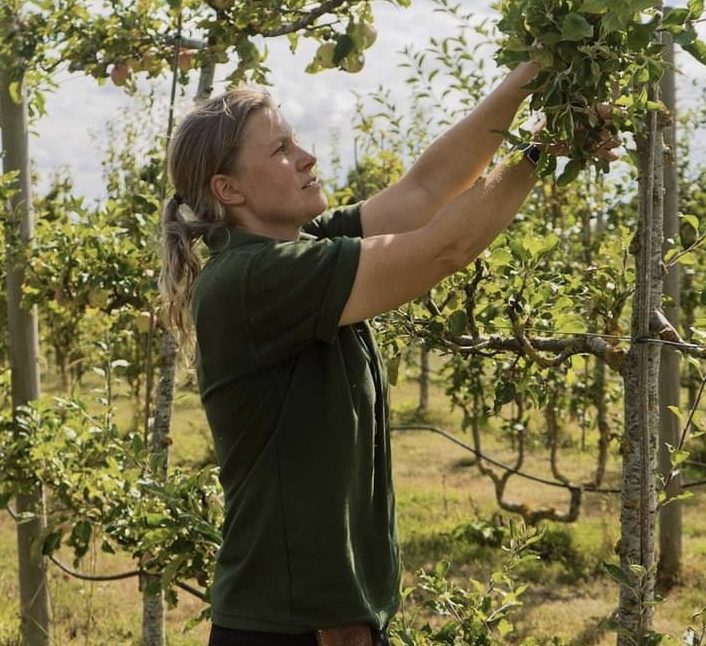
 The Grounded Orchardist
Leave a comment