I have always had an interest in the natural world. Finding ways to work with nature rather than against it is second nature to me. I feel very lucky to be able to do that in my job…even in a formal orchard.

Here are some ways you can start
Encouraging beneficial insects in your orchard
Bee hotels can be species specific or general. It can be as simple as putting a big structure in and filling it with allsorts of bedding such as straw, bamboo, pine cones etc. There is nothing wrong with this and it will soon be teaming with life. I have made nests specific for earwigs and solitary bee/wasp hotels. Lacewing homes will be next and Ladybirds and spiders will use any of these to their advantage, even if its at the back. I want the life to be in the trees so they don’t get distracted elsewhere.
When planting flowers whether wild or ornamental make sure you are only planting single flowers and not doubles, it isnt as simple as buying lavender because bees love lavender. Some lavender isnt suitable for beneficials at all. Wildflowers are great of course but think about what grows naturally in your area. That can change greatly from county to county in the UK. Go to the garden centre on a sunny day and look at what the bees and hoverflies are attracted to. Unless you want instant impact make a note and grow from seed to save money or buy mini plug plants. Use bulbs to extend the flower season. We used to do this on the farm for the bees. We had a vast array of bulbs suitable for bees way before and after blossom time.
Dandelions are incredibly important. If its a small area could you consider leaving them to flower and take the heads off before they seed? If its a large informal area, does it really matter if you have lots of dandelions?
Water is a valuable resource for, well, everything! Even cacti stores it when it’s available. Have a source of water, a shallow tray with stones in and water on top is a great source for bees and other pollinators, ponds will bring in different beneficials too.
letting available space to grow. This could be your field margins, under your trees if they are mature or your rows between trees. It may still need a bit of management but see what works for you.
Plant a mini meadow or leave the grass to grow and mow paths where needed.
Allowing birds
Allowing birds in the orchard while the fruit is not ripe. They will do a lot of good for most of the season, clearing up aphids, caterpillars, sawfly etc.
Yes they peck holes in the ripening fruit or decimate cherries in an instant but up to this point they’re very useful. Net your cherries and frown at bird pecked apples and pears.
Different habitats
Do your research, Sun loving creatures such as bees, wasps etc want a home in the sun. Shade loving and nocturnal creatures such as earwigs would really like a home in the shade. Both sites need to be sheltered. This is why species specific homes might work better.

When making homes think about…
- How high does the beneficial generally fly?
- How high do they fly to nest?
- What predators may attack them once they’re in their home?
- Do you try and stop this or is this part of the natural order?
Pest control
The beneficials need the pests. Think about leaving enough pests that they won’t decimate the crop. I take the majority I can see knowing full well there’s plenty still out there. We are trying to create a balance. We want a crop, we want it pollinated, we want it healthy and pesticide free. In order to achieve this we need a healthy balance of pests, beneficials and man power. You don’t want a sterile environment that’s out of balance. This can take a while to achieve and your orchard or garden will more than likely be different to mine. You may find different things work for you than it does for me.
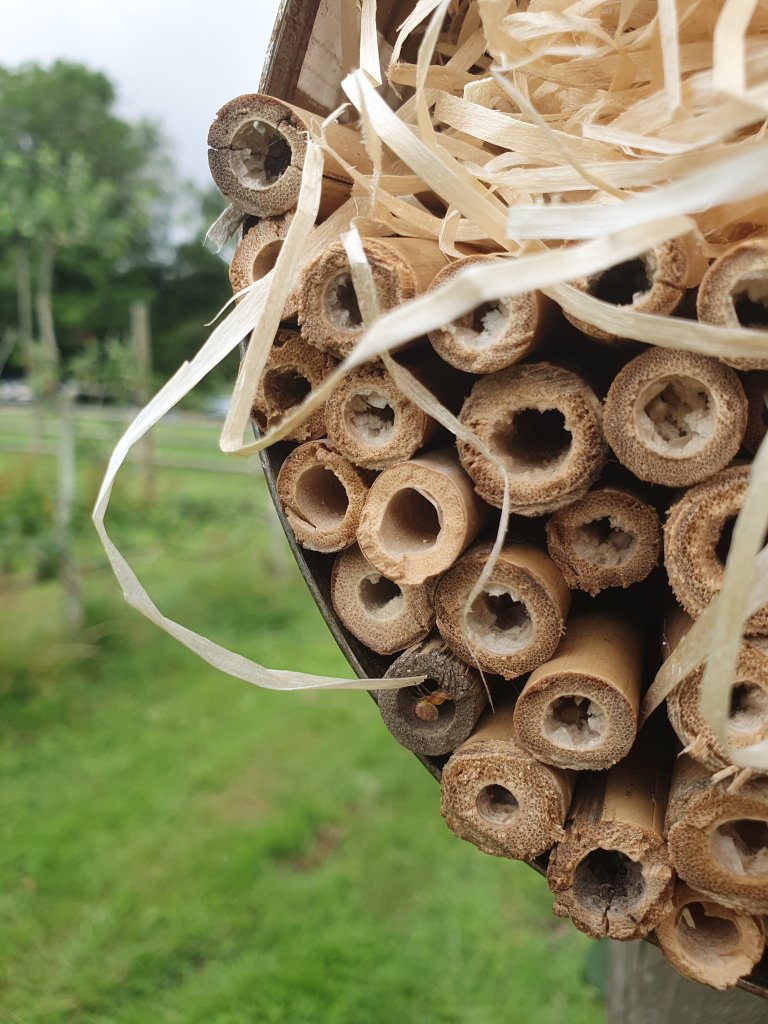
List of orchard beneficials
- Solitary bees
- Honeybees
- Solitary wasps
- Lacewings
- Ladybirds
- Birds
- Beetles
- Hoverflies
- Bats
- Spiders
- These are just a few there are many more
I have found it fascinating watching what arrives and where. There were solitary wasps on the rows of trees with the most aphids, ladybirds know exactly where to go. Earwigs are nocturnal but i have found them hidden away waiting until night. There are bats so hopefully they are eating moths and limiting what eggs are being laid. I have taken the worst of the pest infestations out out by hand. This year I was out much earlier than usual to hopefully avoid tent caterpillar nests. We are a formal orchard and this is very unsightly. Im pleased to report that it worked well and I had very little in the way of webbing. Next year I will do the same again.
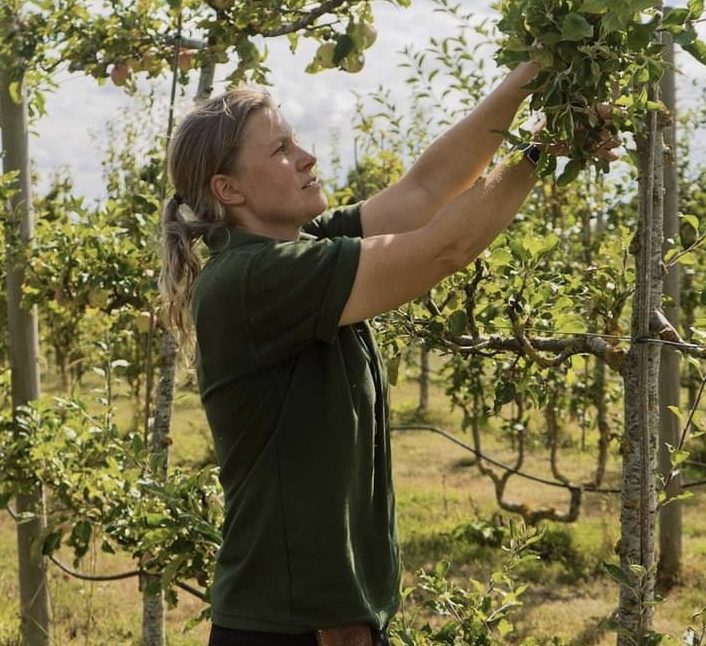
 The Grounded Orchardist
Leave a comment