It’s been a very strange year. The warm, wet winter we’ve had with barely any frosts has made fungal diseases very happy this year. As an organic fruit grower, air and light are two of my biggest helpers. They help combat fungal diseases like scab, powdery mildew, brown rot, and canker.
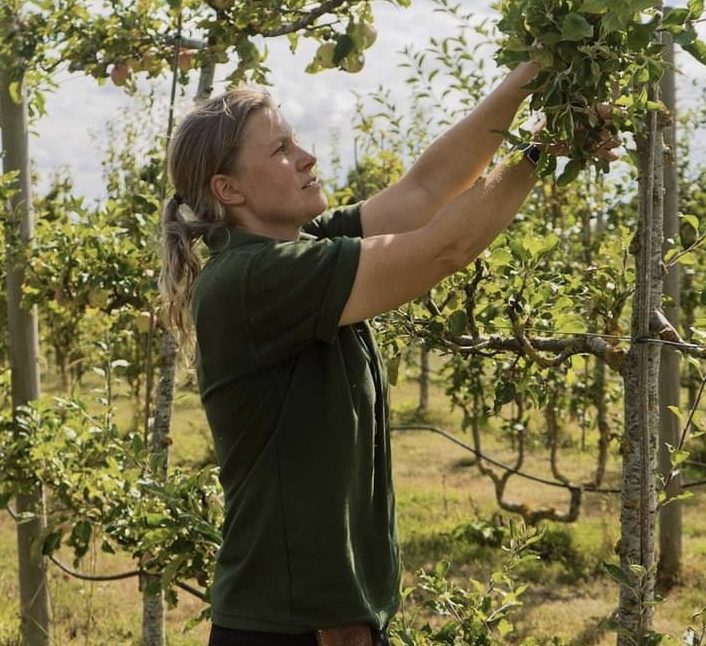
It means there’s a lot of pruning all year round. On some of the trees, just two choice cuts can help. However, on the trained fruit, it can be many more.

So, why does air and light help?
Think of a dingy bathroom. The dark, humid room with no airflow is a breeding ground for all sorts of nasties. This includes fungal spores. Add in ventilation and light to cut the humidity and these spores have a much harder time to take hold.
Orchards are very humid places, trees are basically huge water vessels bringing water and nutrients from root to tip. There is a lot of humidity around the tree. You have the transpiration from root to canopy. There is humidity around the canopy itself. There is also humidity around the outer edges of the tree. Quite often on a hot day, I need to just walk out of the orchard for a breather. It can get very stuffy in there.
The airflow helps the spores to move on and dries out the surrounding area. Light helps to kill the spores or at least weaken them. Cutting the humidity stops the spores from being so happy. In winter, after leaf fall, these spores are more open to the elements. If you haven’t got round to winter pruning, frost helps to kill some of the spores off. You can see how all these steps help to keep fungal spores at a manageable rate.
How do I achieve this?
I cut out choice branches with my summer pruning. There’s a lot of factors as to which branches I choose to summer prune…
Weather – First of all, factor in the weather. If cutting out powdery mildew, its best to do this on a still day with no wind…that said. If you see it, take it out. Canker spreads when raining so when the fruiting spores are visible it’s best to catch this before hand.
Air – Airflow moves the spores on. it dries the area a little, making it not such a lovely habitat for the spores. Whilst thinking about airflow, think about the flow around the whole tree, not just through it. I like to create a gap at least floor to knee height. This allows airflow at the bottom of the tree too. This includes any grass or wildflowers that are at the bottom.
Light – Allowing light into the space will make the area not so inviting for fungal spores. They prefer dark places to thrive.
Dead, diseased and damaged – Take the opportunity while you are in your tree. Remove any dead, diseased, or damaged limbs you come across. I love imagining how many fungal spores I have just taken out when removing effected fruit, leaves and branches.
Shape – While you are there you might well use the time to shape your tree and get ahead on your winter pruning
You can use the above tips to make decisions. Either cut out or weigh down branches. This will help put them in a more suitable space. If weighing down branches be careful so they do not snap. Doing this means a branch growing upwards next to another can be trained to utilise the space else where. that way you keep the fruiting potential of that limb and don’t have to wait two years for another!
Just remember that summer pruning promotes growth. This is a great way of encouraging fruit buds to form but it also promotes a lot of vegetative growth. This isn’t a bad thing if you have time. I see it as a way of having more opportunities moving ahead through the years. If I don’t want that new growth, I will take it out whilst winter pruning.
I have gained fantastic results by pruning much harder than advised. I use that new flush of growth to make a much more balanced tree. So don’t be afraid of taking off more than you have read or been told you should!
Try and enjoy it, Choose a lovely day. If you get fed up, walk away and come back to it. If you have lots of trees just think every bit you take out helps, even if you can’t finish it.
 The Grounded Orchardist
Leave a comment