Months back, you excitedly grafted your fruit tree with so much hope. Eventually, with some of your grafts, you have to admit defeat. However, this is by no means the end of the story and not a negative! Let me tell you why!
Why did my grafts fail?
There are many reasons why a graft can fail and you wont always be able to diagnose the reason. This is also why it’s important to do a few more grafts than you are hoping for.
- Maybe the Cambium layer was not sufficiently intact between scion and rootstock.
- Perhaps the grafting tape was not wrapped tightly enough and it got wet.
- The wound might have been accidentally touched. Oils from your fingers could have created a barrier between the two wounds.
- It could be that disease had entered the graft.
- It could simply be incompatibility of the two pieces.
- Or, maybe a big old pigeon came and sat on the scion dislodging it! It happens!!
So, how can we turn the failed graft into a positive?
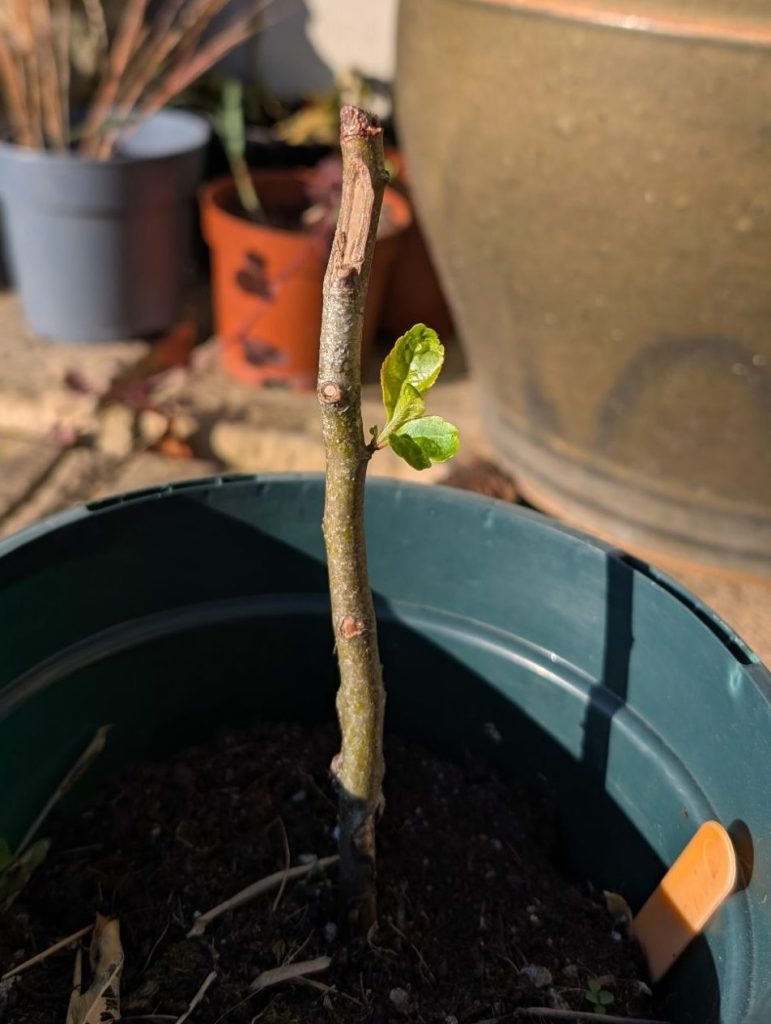
In the picture above you can see one of my failed bud grafts. I knew a while ago it had failed. I kept it growing because I can reuse the rootstock. So instead of nurturing the graft my attentions turn to nurturing the rootstock.
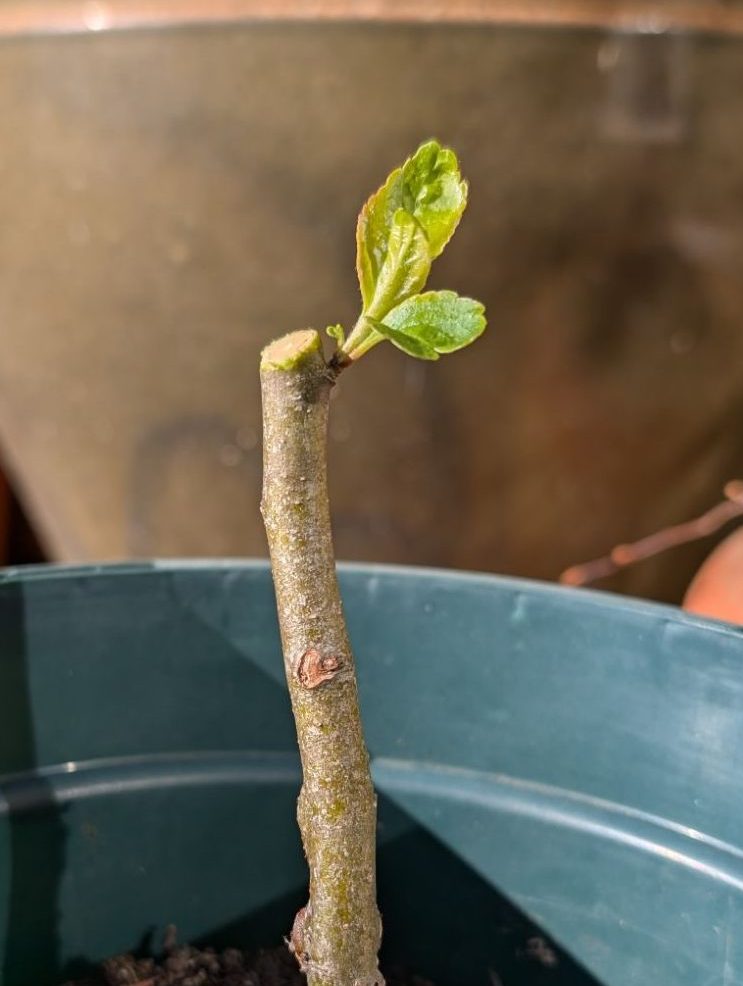
There is indeed new growth coming from the rootstock. I have cut the rootstock just above the new growth. Making sure the cut is a diagonal cut sloping away from the new growth. This is so water does not pool on the fresh green growth causing rot.
Then, grab a bamboo cane to train the fresh new growth to be nice and straight. Remember we do not want this to fruit. So if it flowers at all, remove them. We are just growing this on to create a strong root system.
You can grow this on in ordinary compost, wood chip or a sandy mix. You could grow it in a pot. Alternatively, plant it in the ground. However, I suggest making a temporary bed. Do this unless you are growing in situ for grafting at a later date.
If growing in its final place just remember to keep on top of pest and disease control…rabbit guards will be very important.
Remember to water this and make sure there is no competition from weeds.
I will then reuse this rootstock for another graft later on when this has matured. All being well, this should be next year or the year after.
 The Grounded Orchardist
Leave a comment