So, the Medlar harvest is in! A fantastically whimsical fruit. Very popular in medieval times but not so popular now, That said, everyone who I have met that grows them…love them. Medlars are native to areas such as Iran, Turkey and Greece. Then the Romans brought them over to the UK.

This year, our Medlars actually started bletting on the tree, and no, we haven’t had a frost yet! I probably could have let them continue to blet on the tree and do multiple picks. However, I wanted to get on with some maintenance and admin jobs before pruning begins.
What is Bletting?
For those who don’t know what bletting is, it’s a lovely word to use for medlars instead of overripe. Though you could argue these are ripe?! A bletted Medlar is a soft, squishy, darker brown one. Perhaps even a little oozy. No mould should be present.
Because I have picked them in one go, it means I need to blet them off the tree. I don’t have many suitable spaces to blet the Medlars, they need to be out of direct sunlight, dry and airy. So I have used Hessian matting to block out the bulk of the light in one of our polytunnels. Very simple but it’s worked a treat! This does mean they need to be regularly graded though.


The second picture above shows the graded medlars that still need bletting in the tray on the left. They are still hard with that lovely golden colour.
The tray on the right shows medlars that are bletted or partially bletted. The partial ones will quickly catch up! Soft, squishy, and a much darker brown in colour.
Why should you grow Medlars?
I really enjoy growing Medlars and love it when the leaves fall and there are just medlars left over….if Tim Burton created real trees, I reckon he would definitely have Medlars there somewhere!
The trees themselves are very interesting and much like the fruit they differ to other fruit trees. They have lovely blossom with a frilly edge to the petals, Some years, the flowers are white and some years pink…I’m not sure why. In Autumn, the leaves are stunning and have very autumnal shades different to the rest of the orchard, Just look at that copper colour coming through.

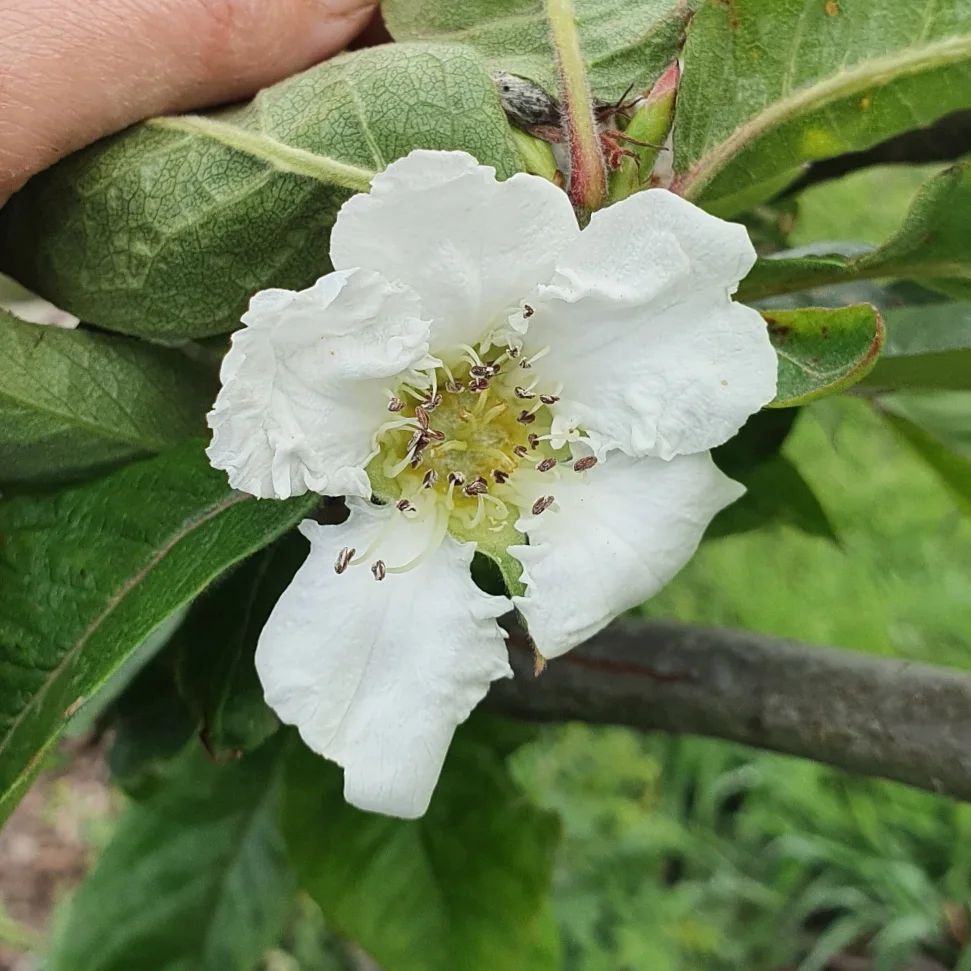
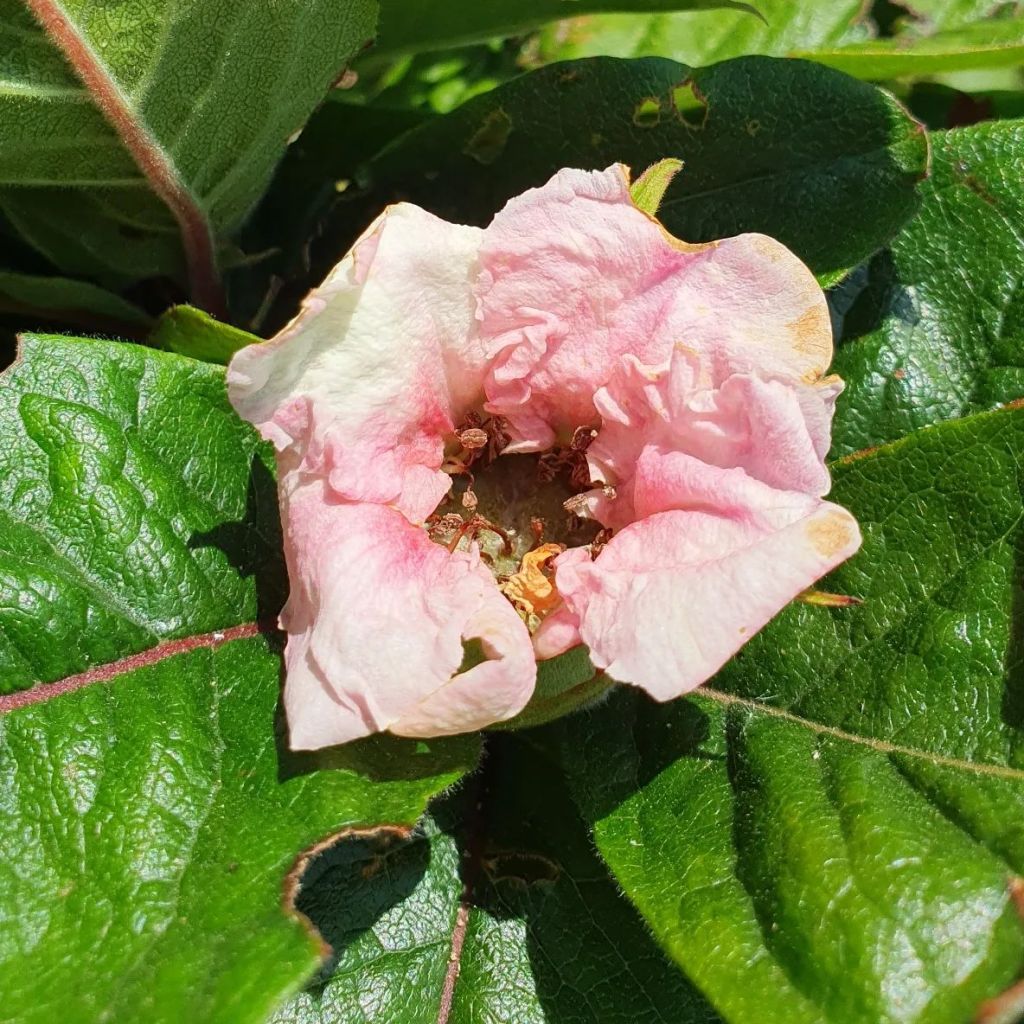

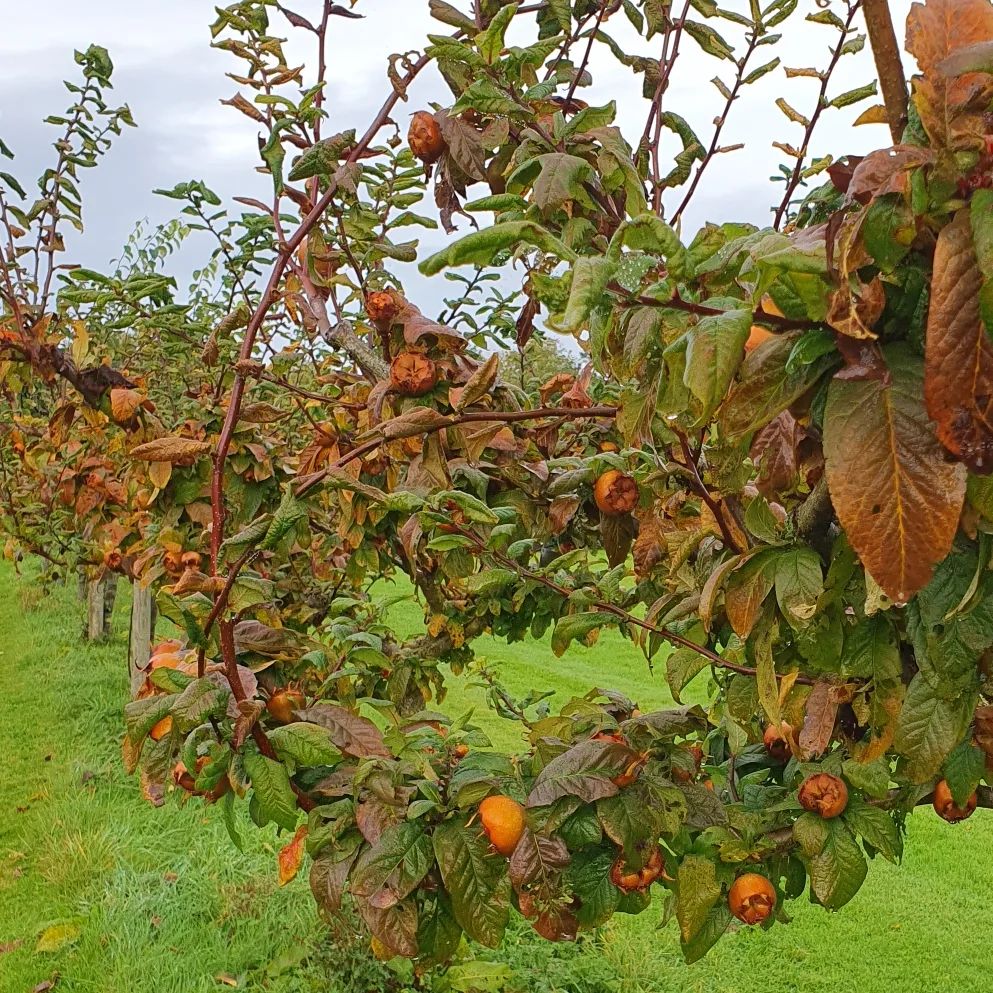
So, why grow a medlar? You get a crop, a tree, and an ornamental in one space. Whether you have heard of them or not, it’s always a talking point.
Medlars and pests and disease

To be honest, I have not found the Medlars to have many pests. A few caterpillars on the leaves. A few wasps at the end of the season. It could be because we have so many other fruit trees here the pests favour them, or maybe they do not have many pests.
In terms of diseases, our trees are trained to an open centre and they are at the edge of the orchard. This means that these trees have very good airflow, which keeps fungal diseases at bay.
The picture above shows a heart pumping moment in the orchard. There were many more wasps than this, which made picking annoyingly slow. They were very chilled, but I still didn’t fancy grabbing one.
I managed to pick most of the medlars, and I left the wasps alone to enjoy their ones. After all, we are working with nature, not against it. Remember, Wasps are very important in the eco system!
If a bunch of ladybirds is called a loveliness, then I put it to you that the collective noun for a bunch of wasps should be called a worryness!
What can you use medlars for?
In the past, I’ve made a medlar liqueur, eaten them fresh and made the fantastic Medlar jelly. This year, more Medlar liqueur and I think I will make it with spiced rum this time. I will be making @mark_diacono Medlar sticky toffee pudding too.
There are quite a few Medlar recipes around the internet. @mrsbilton on instagram makes a medlar mincemeat, I shall be making that next year! She also has various other interesting uses for Medlars.
For much better advice and knowledge about medlars, you need to follow Jane Steward @eastgatelarder on Instagram or buy her very informative book. Medlars, Growing and cooking by Jane Steward.
 The Grounded Orchardist
Leave a comment