This is kind of a personal preference thing. My personal preference is…as little as possible. I believe trees need to dig deep in order to grow a strong, healthy tree that’s able to fight against whatever may be thrown at it.

If you water fruit trees constantly they will not put down deep roots. The tree will not waste valuable energy when it doesn’t need to. What you’re doing is making water too freely available at the top layer of soil. Deeper roots will mean a stronger tree which in turn generally means healthier, with less windrock and able to dig to find those hidden nutrients down within the soil.
Younger and newly planted fruit trees definitely need more watering. Older more established trees however can be left for quite a while…or in most cases, just left. Pot grown fruit trees will need watering much more often as pots dry out very quickly and the roots are much more exposed, I would recommend a watering schedule to stick to dependant on weather conditions.
The leaves will tell you when it’s needed. Leaves tell you a lot about the trees needs. Brown crispy leaf margins are a dead giveaway and if possible you do not want to let it get to this point! Leaves that have curled up or are withered are another sign…however, that’s another sign of allsorts of things so you’ll need to narrow it down.
Assess the whole tree or row rather than just a few branches. Has there been rain recently? Are there Aphids or signs of Aphids? Caterpillars or Caterpillar damage? A change of colour? A light green on older leaves but not the same as the vibrant ‘new growth green’ could signify the tree needs water. Mottling, yellowing or purple leaves would usually mean a nutrient deficiency.
The other problem to consider is with Plums, Greengages and Damsons. They are prone to splitting if they are growing in drought conditions and all of a sudden there’s a rush of water, whether that be rain or manually. They just swell too quickly with the rush of water made available to them all of a sudden.

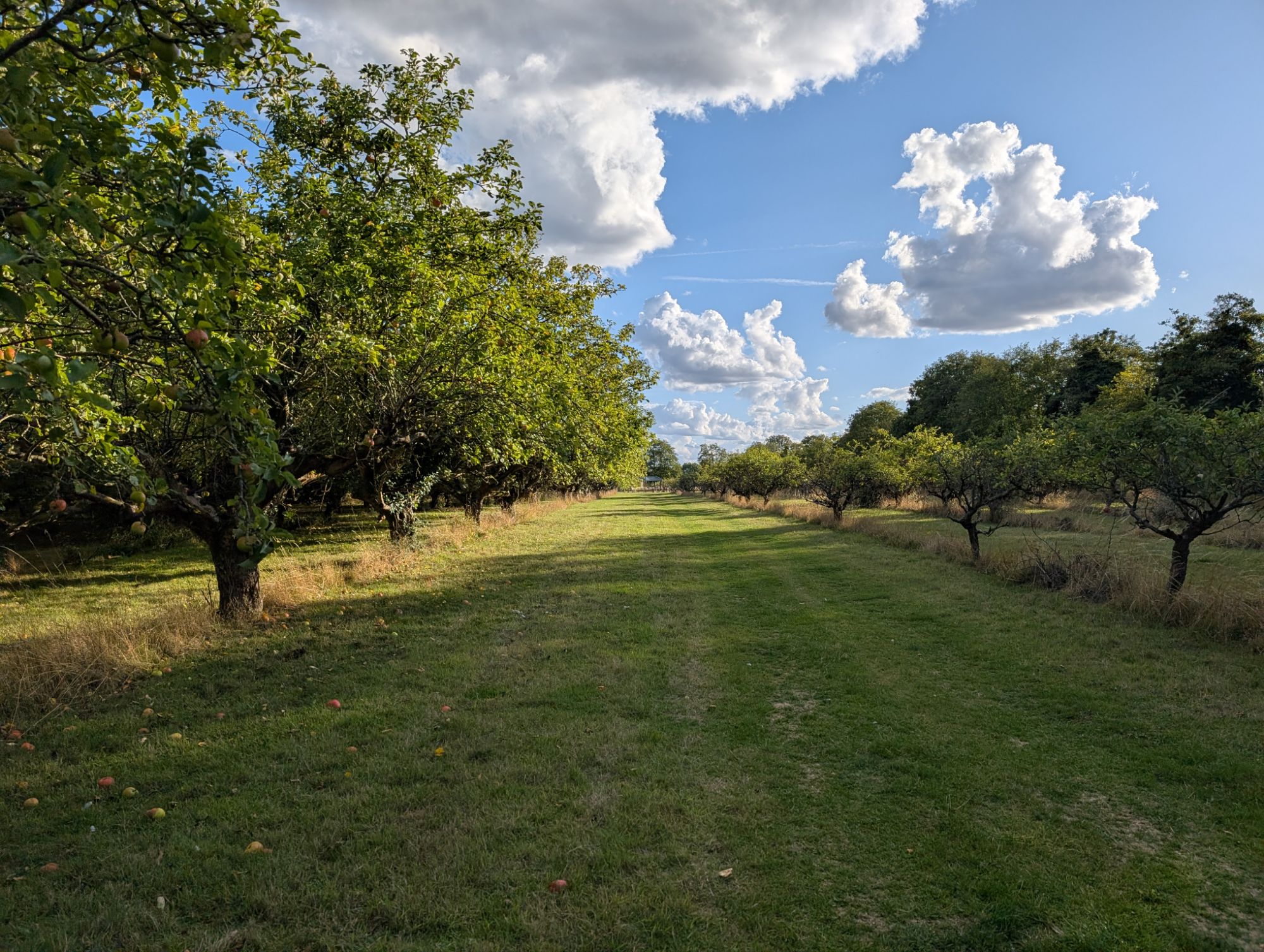
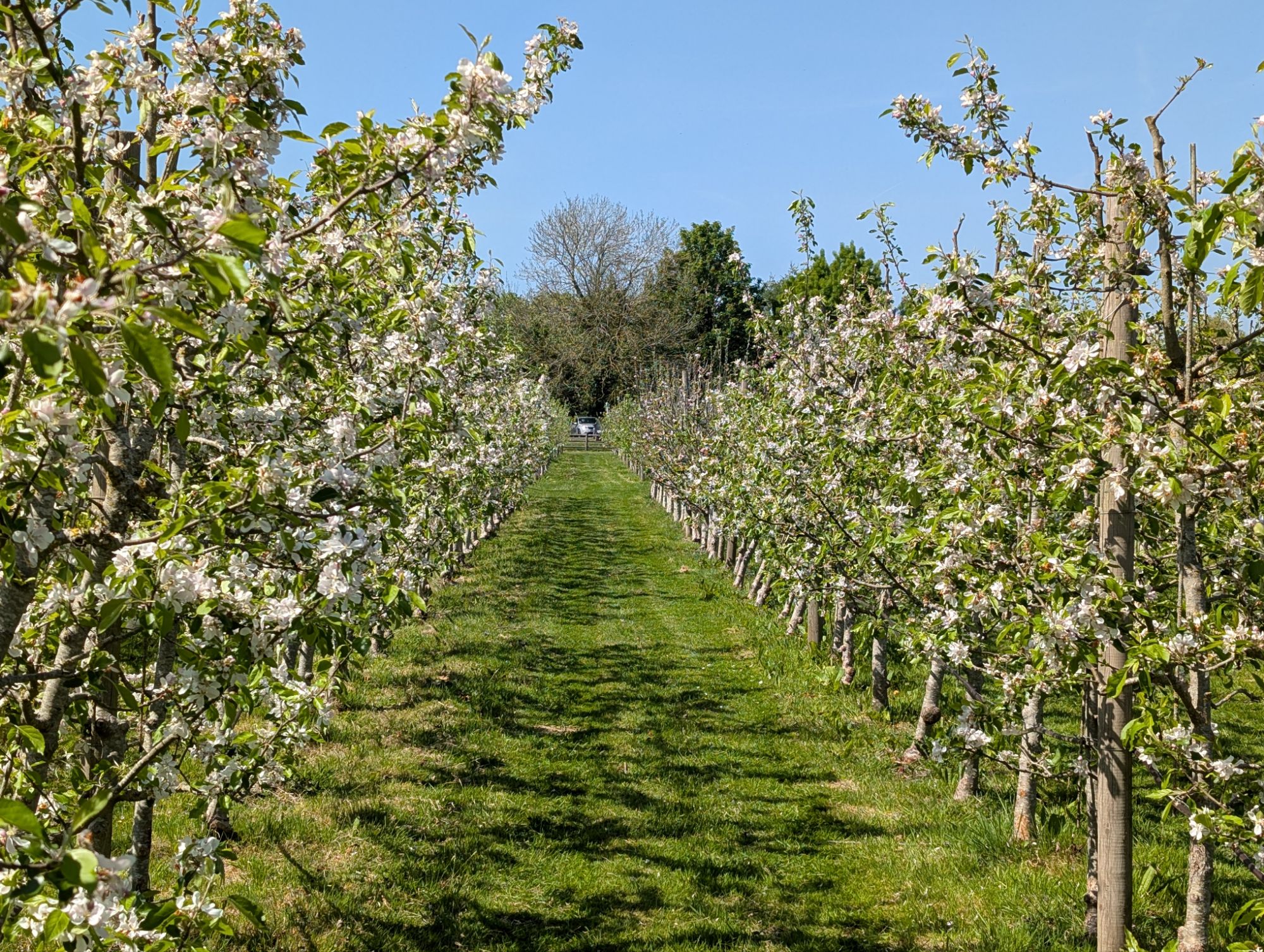
We didn’t have irrigation on the farm and when desperate we would use our empty, cleaned sprayer with the sprayer turned off but tap open to run alongside the new rows of young trees to try and water them. I would say the more established trees up there didnt particularly suffer from drought conditions, we had some trees up there that were up to 100 years old…very well bedded in. We were also on a hill which makes watering efficiently a challenge.

We do have irrigation in the orchard I now work in. The source is a borehole 100 metres or so away from the orchard…however, I try not to use it. I nearly did a couple of weeks ago as we were basically in drought and I had put down chicken manure pellets and I needed to bed them in. It’s no good if they’re just sat there dry on top of the soil! Luckily an evening of rain was forecast so I waited a bit longer.
We do have an environmental responsibility too of course. Something were all having to learn quite quickly. Using water only when needed even if its free from a lake, collected or a borehole.



Leave a Reply